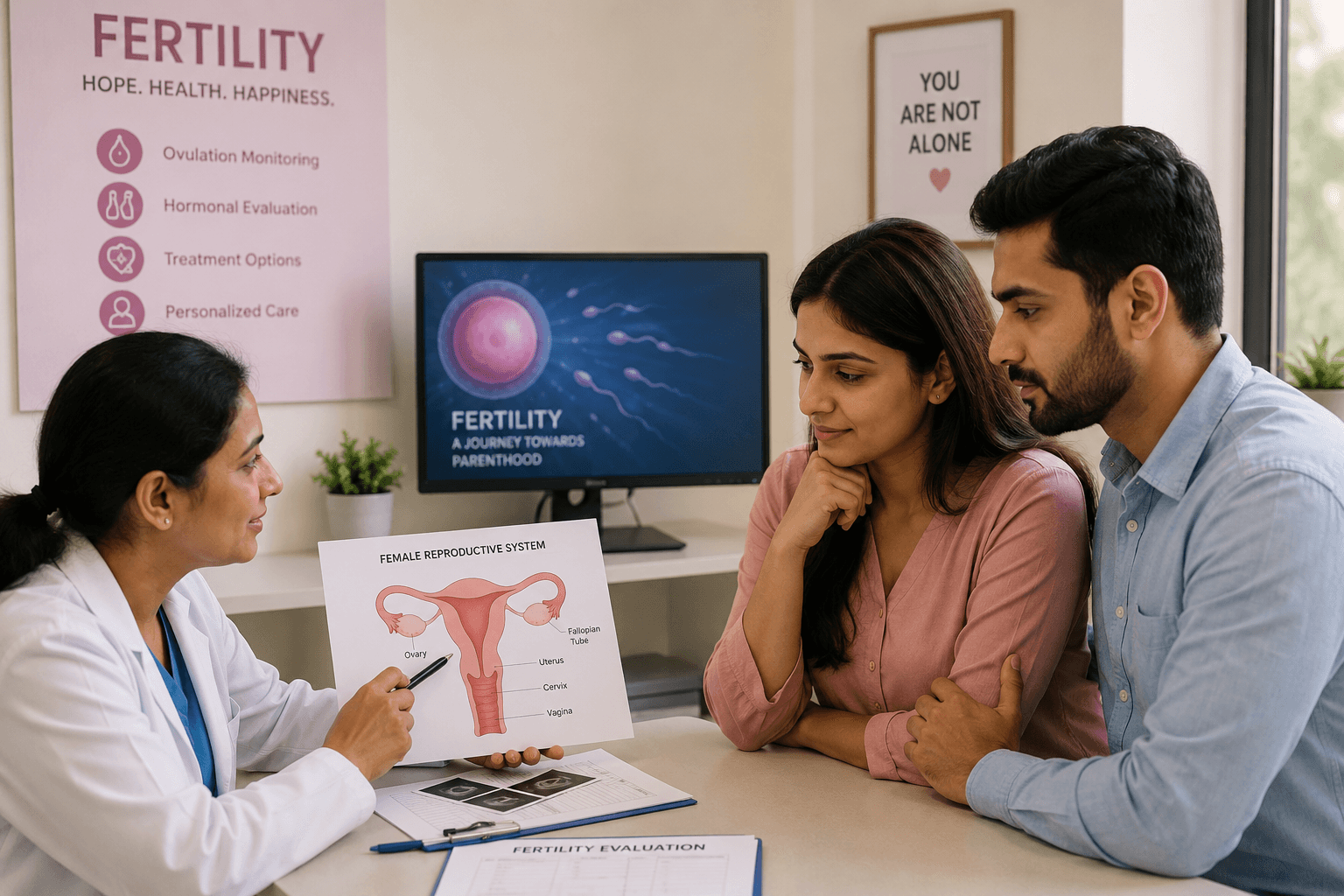
One of the most painful phrases in modern fertility medicine is "unexplained infertility." It is the label applied when a couple has tried for a year or more, the standard workup has not revealed a clear cause, and the recommended next step is usually IUI or IVF.
The phrase is not quite dishonest, but it is profoundly incomplete. What it means, in practice, is: "we checked sperm, tubes, ovulation, and the uterus; all look reasonable; we have nothing else to offer diagnostically." It does not mean the infertility has no cause. It means the workup stopped short of finding it.
In our clinic, "unexplained" infertility is one of the most common presenting stories and, surprisingly, one of the most tractable. A proper upstream workup typically identifies two or three specific, treatable drivers. Addressing those drivers - over a four- to nine-month preparation window before any intervention, or during IVF cycles to improve their odds - produces a meaningful share of pregnancies in couples who have been told they need assisted reproductive technology.
This article is a long explanation of what the standard workup misses, what a root-cause fertility workup adds, what a proper preconception protocol looks like, and three real cases that show what "unexplained" usually turns out to be.
What fertility actually requires
Fertility is not a single organ function. A pregnancy requires all of the following to be in reasonable shape, within roughly the same three-month window:
- Ovulation - a mature egg released, on a reliable schedule
- Egg quality - the egg's own health, which reflects the body's health three months earlier
- Sperm health - count, motility, morphology, and DNA integrity
- Fallopian tube patency - open passage for the sperm and embryo
- Uterine receptivity - an adequate lining, free of significant fibroids, polyps, or inflammation
- Implantation environment - hormonal, immune, and vascular conditions that allow an embryo to embed
- Systemic hospitability - thyroid, insulin, vitamin D, iron, inflammation, stress physiology, and sleep all in a range that supports pregnancy maintenance
The standard fertility workup - sperm analysis, hysterosalpingogram, ovulation tracking, uterine imaging, basic hormonal panel - checks the first five. It barely touches the sixth. It essentially ignores the seventh.
Most "unexplained" infertility lives in the sixth and seventh.
The drivers the standard workup misses
Thyroid function - beyond "normal TSH"
Thyroid dysfunction is the single most under-acknowledged driver of infertility in Indian women. Not because it is not checked - most fertility workups include a TSH - but because the standard of "normal" is not the standard of "fertile."
For fertility, TSH should ideally be between 1 and 2. Not "in range." Not "below 4." Between 1 and 2. A TSH of 3.4, commonly labelled "borderline" and dismissed, is associated with reduced ovulation, lower implantation rates, and higher miscarriage risk.
More importantly, the standard TSH-only panel does not capture autoimmune thyroiditis - anti-TPO antibodies - which affects fertility independently of TSH level. Women with positive anti-TPO have higher miscarriage rates even with normal TSH, and respond well to thyroid optimisation plus autoimmune root-cause work.
Insulin resistance - in women who are not obvious PCOS
PCOS is usually diagnosed. What is often missed is the subclinical insulin resistance in women who do not meet PCOS criteria but have elevated fasting insulin, irregular but not dramatic cycles, and subtle metabolic signs. High insulin affects egg quality, ovulation, and uterine environment. It is very common in Indian women in their thirties.
Fasting insulin is cheap and diagnostic. It is almost never on the standard fertility workup.
Vitamin D, iron, B12, and folate
Each is independently associated with fertility outcomes. Severe vitamin D deficiency (below 20 ng/mL) is associated with lower pregnancy rates and higher miscarriage. Iron deficiency (ferritin below 30) is remarkably common in menstruating Indian women and affects both ovulation and implantation. B12 below 400 is associated with reduced fertility. Folate requirements are higher in the preconception period than in general nutrition.
Most fertility workups include a vitamin D and sometimes a B12. Ferritin is often checked only when anaemia is suspected. These targets should be optimal, not adequate.
Inflammation
A high hs-CRP in a woman trying to conceive is a meaningful finding. Systemic inflammation impairs implantation and early pregnancy. It is usually not tested.
The gut
Gut dysbiosis, SIBO, and silent intestinal inflammation contribute to systemic inflammation, nutrient malabsorption, oestrogen recycling problems, and immune dysregulation - all of which affect fertility. Most fertility workups do not ask about the gut at all.
Male fertility beyond sperm analysis
Sperm analysis is a snapshot. DNA fragmentation index (DFI) is a deeper measure that correlates more strongly with fertility outcomes and miscarriage risk. It is often abnormal when standard sperm parameters are "normal." It is rarely ordered in Indian fertility workups.
Male metabolic health - insulin, vitamin D, zinc, selenium, alcohol, sleep, heat exposure (tight underwear, laptop on lap, frequent hot showers) - affects sperm quality independently of the standard parameters.
Stress physiology and sleep
Chronic stress and short sleep affect ovulation, luteal phase adequacy, implantation, and male sperm quality. This is not soft science. It is measurable in cortisol patterns, heart rate variability, and reproductive outcomes. The conventional fertility system has almost no tools for this, and often dismisses it.
Autoimmunity and undiagnosed coeliac
Autoimmune conditions - thyroid, lupus, antiphospholipid - affect fertility and pregnancy. Undiagnosed coeliac disease is a surprisingly common hidden cause of "unexplained" infertility, because it disrupts nutrient absorption (particularly folate, iron, zinc) and creates inflammatory conditions in the uterus. Coeliac screening should be routine in unexplained infertility.
The full fertility workup
When a couple comes in with unexplained infertility, the workup we run (in addition to whatever the fertility specialist has already done) usually includes:
For the woman:
- Full thyroid panel: TSH, Free T4, Free T3, Reverse T3, Anti-TPO, Anti-Tg
- Fasting insulin, HOMA-IR, HbA1c
- Vitamin D, B12, folate, Ferritin, zinc
- hs-CRP
- Full sex hormone panel: FSH, LH, oestradiol, progesterone (timed correctly), AMH, prolactin, total and free testosterone, DHEA-S, SHBG
- 25-hydroxyvitamin D, 1,25-dihydroxyvitamin D in some cases
- Coeliac screening (tTG-IgA with total IgA)
- Autoimmune screen if indicated: ANA, antiphospholipid antibodies
- Gut history and, where indicated, SIBO or stool comprehensive panel
- Careful menstrual and ovulation history
- Lifestyle review: sleep, stress, caffeine, alcohol, exercise
For the man:
- Standard semen analysis if not recent
- Sperm DNA fragmentation (DFI)
- Testosterone, oestradiol, thyroid (if indicated)
- Fasting insulin and metabolic panel
- Vitamin D, zinc, B12
- hs-CRP
- Lifestyle review: heat exposure, sleep, alcohol, smoking, weight, exercise
This panel takes one or two sessions to complete and interpret. The information density is high. The findings almost always explain what the couple has been unable to explain for themselves.
The preconception protocol
The protocol is built on a well-validated three-month biology principle: the egg takes roughly 90 days to mature from primordial follicle to ovulation; sperm takes roughly 72 days from primary spermatocyte to ejaculated sperm. What you do in the three months before conception matters at least as much as what you do during it.
The protocol has four layers, run simultaneously, over a four- to nine-month window depending on the complexity of the picture.
Layer 1: fix the thyroid, insulin, and nutrient picture.
Thyroid optimisation to TSH 1-2, free T3 in the upper half of range, antibodies reducing. Vitamin D to 50-70. Ferritin to 70+. B12 to 500+. Folate in the methylated form (methylfolate) if MTHFR status is uncertain. Insulin to under 10. HOMA-IR to under 2.
Layer 2: reduce inflammation.
Gut work if gut is implicated. Omega-3 at clinical dose (2-3 g/day). A whole-food anti-inflammatory diet. Elimination of ultra-processed food, industrial seed oils, and excess alcohol. Where relevant, gluten or dairy elimination. hs-CRP as a tracked marker.
Layer 3: egg and sperm quality support.
For the woman: CoQ10 (typically 200 mg/day), myo-inositol if PCOS or insulin-resistance features, NAC, vitamin E, methylfolate, iodine if indicated. For the man: CoQ10, zinc, selenium, vitamin C and E, L-carnitine, omega-3. Alcohol cessation for both during the window. For the man specifically: loose underwear, laptops off laps, hot baths avoided.
Layer 4: stress, sleep, and life structure.
Sleep protected at seven and a half to eight hours. A daily stress practice (breath, yoga, walking in daylight). Where relevant, some reduction in work intensity. Reduction of caffeine in both partners to one cup a day. This is often the hardest layer to move, and the one that differentiates outcomes most.
How this fits with IVF
We are not against assisted reproduction. For some patients, it is the right and necessary path, and we work with fertility specialists routinely.
What we have seen is that the same couples achieve better outcomes in IVF cycles after three to four months of preconception preparation. Egg retrieval yields are higher. Embryo quality is better. Implantation rates rise. Miscarriage rates fall. The cost-per-live-birth ratio improves substantially.
We also see couples who, after the preparation window, conceive naturally and cancel their planned IVF cycle. This is, surprisingly, more common than most fertility clinics acknowledge. The preparation window reveals how much of the "unexplained" infertility was actually a set of addressable drivers.
The message is not "don't do IVF." The message is: if you are going to spend a meaningful amount of money and emotional energy on assisted reproduction, do three to four months of proper preparation first. The returns are substantial.
Case study - Ananya and Rohit, 34 and 36, Bengaluru
Ananya and Rohit had been trying for twenty-two months. One early miscarriage at week 7, the previous year. Standard fertility workup at a reputable clinic had found: patent tubes, regular ovulation, normal uterus, AMH 3.2 (reasonable), sperm analysis "mild asthenospermia" (reduced motility) but borderline. Recommendation: IUI, escalate to IVF if needed.
They came to us for a second look before committing to the IUI cycle.
What the extended workup found:
For Ananya:
- TSH 3.4 (above optimal for fertility)
- Anti-TPO 180 (autoimmune thyroid, not previously tested)
- Fasting insulin 14, HOMA-IR 2.9
- Vitamin D 14, Ferritin 18, B12 320
- hs-CRP 2.6
- Coeliac screen: weakly positive tTG-IgA
- Gut: long-standing intermittent bloating, a history of three antibiotic courses in the last three years
- Cycles regular at 28-30 days, but luteal phase short on progesterone testing (day 21 progesterone 6 - should be 10+)
For Rohit:
- Fasting insulin 19, HOMA-IR 4.1
- Vitamin D 17, zinc low
- hs-CRP 2.1
- Sperm DFI 28% (elevated - a strong predictor of miscarriage)
- Lifestyle: daily hot shower, laptop on lap, six hours sleep, regular alcohol
Neither had a single major finding. Both had a cluster of drivers that, together, explained both the difficulty conceiving and the previous miscarriage. The elevated sperm DFI plus the autoimmune thyroid plus the coeliac-spectrum issue plus both partners' insulin resistance was a recipe for low fertility and early pregnancy loss.
Protocol, four-month preparation window:
For Ananya: gluten elimination strict, thyroid optimised with low-dose thyroxine to TSH 1.4 under endocrinology coordination, vitamin D loading, iron repletion, selenium for antibodies, inositol for insulin, CoQ10 200 mg, methylfolate, omega-3, gut repair protocol.
For Rohit: alcohol cessation, cool showers, laptop off lap, boxers instead of briefs, CoQ10 300 mg, zinc, L-carnitine, vitamin C and E, omega-3, protein-forward diet, sleep extended to 7.5 hours, resistance training.
Month 4 reassessment:
- Ananya: TSH 1.4, anti-TPO 60, vitamin D 54, ferritin 72, hs-CRP 0.8, day 21 progesterone 11
- Rohit: fasting insulin 8, DFI 12%, vitamin D 52
- They decided to try naturally for three more months before committing to IUI
Conceived in month 6. Continued modified protocol through pregnancy with obstetric care. Delivered a healthy baby at term. The IUI cycle was never used.
Case study - Meera and Sanjay, 37 and 38, Mumbai
Meera and Sanjay had been through two unsuccessful IUI cycles and one failed IVF cycle (two embryos transferred, no implantation). They had been told by their fertility clinic that their next cycle would be their last covered by insurance and that they might need to consider donor egg.
Meera had low AMH (1.4), which at 37 was not catastrophic but was unhelpful. Her previous workup had TSH of 2.1 and "normal" thyroid. Sperm parameters were normal on standard analysis.
Our extended workup:
For Meera:
- TSH 2.1, Free T3 low, Anti-TPO 90 (positive, not previously flagged)
- Fasting insulin 11, HOMA-IR 2.3
- Vitamin D 19, Ferritin 24, B12 380
- hs-CRP 1.8
- Reverse T3 elevated, ratio poor
- Autoimmune screen: low-positive antiphospholipid - of uncertain significance but worth knowing
- Gut history: chronic low-grade bloating, SIBO breath test positive
For Sanjay:
- Sperm DFI 32% (very elevated, despite normal standard analysis)
- Testosterone low-normal, fasting insulin 15
- Vitamin D 14, hs-CRP 2.9
- Severe sleep debt: 5-6 hours in his corporate finance role
Meera had a hidden autoimmune thyroid picture, subclinical hypothyroidism by fertility standards, SIBO, and a possible but not definitive autoimmune implantation issue. Sanjay had profound sperm DNA damage explaining the failed IUI and IVF cycles. Both pictures had been missed.
Five-month preparation protocol:
For Meera: thyroid medication titrated to TSH 1.3 and free T3 in the upper half of range, SIBO treatment with rifaximin under physician care, gluten elimination, vitamin D loading, iron repletion, inositol, CoQ10 300 mg, omega-3 3 g/day, low-dose aspirin started for the possible antiphospholipid picture (coordinated with rheumatology), sleep structuring, stress protocol.
For Sanjay: dramatic lifestyle shift - sleep protected at 7.5 hours by negotiating work constraints, alcohol cessation, CoQ10 600 mg, zinc, selenium, vitamin E and C, L-carnitine 2 g/day, vitamin D loading, omega-3, resistance training, cool showers, boxers.
Five-month reassessment:
- Sanjay's DFI dropped from 32% to 11%
- Meera's vitamin D, ferritin, antibodies, and thyroid all optimised
- Their next IVF cycle yielded twelve eggs, nine mature, seven fertilised, five good-quality embryos, of which one was transferred and implanted successfully
Their obstetrician continued the low-dose aspirin. Pregnancy went to term. They have since had a second successful natural conception nineteen months later, without further intervention - a striking outcome for a couple once considering donor egg.
Case study - Priyanka and Arvind, 31 and 33, Pune
Priyanka and Arvind had been trying for fourteen months. Neither had any obvious problem. Priyanka had regular cycles. Arvind's sperm was "excellent." The standard workup was unremarkable. They had been told to continue trying, and "perhaps in another six months we can consider IUI."
They were frustrated. Priyanka also mentioned, in passing, that she had had dietary bloating for years and had always felt iron-deficient, but nothing dramatic.
Workup:
For Priyanka:
- TSH 2.8, Anti-TPO 30 (borderline), Free T3 low-normal
- Fasting insulin 8 (reasonable)
- Vitamin D 11 (severe), Ferritin 9 (very low), B12 280
- hs-CRP 2.0
- Coeliac screen: tTG-IgA strongly positive; gastroenterology referral led to biopsy-confirmed coeliac disease
- Luteal phase: day 21 progesterone 7 (suboptimal)
For Arvind:
- Fasting insulin 13, HOMA-IR 2.7
- Vitamin D 18
- Sperm parameters strong on standard analysis; DFI 10% (good)
- hs-CRP 1.2
This was a case where the woman had undiagnosed coeliac disease driving iron deficiency, vitamin D depletion, inflammation, subclinical thyroid dysfunction, and luteal phase inadequacy. Her fertility was not "unexplained." It was entirely explained. Her gastroenterologist had not been involved, and her fertility clinic had not thought to screen for coeliac.
Protocol: strict gluten-free diet (necessary for life for coeliac disease), aggressive iron repletion (initially intravenous, as her oral response was slow), vitamin D loading, B12 supplementation, selenium, omega-3, gut repair, methylfolate. Priyanka's thyroid was monitored; as her gut healed, thyroid parameters improved without medication.
Arvind: basic insulin and vitamin D work, resistance training, cardiometabolic food pattern, as part of the shared effort.
Four months:
- Priyanka: ferritin 78, vitamin D 56, TSH 1.6, Anti-TPO 18, day 21 progesterone 12, hs-CRP 0.6
Conceived in month five. Pregnancy carried to term. Priyanka remains gluten-free for life, with thyroid antibodies now consistently negative and no need for medication.
Her case is a reminder that "unexplained" often means "un-investigated." Coeliac screening should be part of any unexplained-infertility workup. It costs very little. It changes everything when it is positive.
What to ask for
If you have been trying to conceive for a year (or six months if you are over 35), or if you are about to start IUI or IVF, ask for:
- A full thyroid panel - not just TSH - including antibodies, with fertility-optimised targets
- Fasting insulin and HOMA-IR for both partners
- Sperm DNA fragmentation (DFI) for the man, not just the standard semen analysis
- Vitamin D, B12, folate, ferritin, zinc with optimal, not "adequate," targets
- hs-CRP to assess systemic inflammation
- Coeliac screening (tTG-IgA with total IgA) in the woman
- A careful gut history and, if symptoms suggest, SIBO or stool testing
- An honest review of sleep, stress, alcohol, and lifestyle - not a shame exercise, a clinical one
The honest framing
Unexplained infertility is usually not unexplained. It is under-investigated. The standard workup is designed to rule out structural and obvious hormonal problems; it is not designed to surface the metabolic, inflammatory, autoimmune, nutritional, gut, and lifestyle drivers that cumulatively determine fertility.
A proper upstream workup - followed by a proper three- to six-month preparation protocol - produces real pregnancies in couples who have been told they need assisted reproduction, and substantially improves outcomes in couples who do go through assisted reproduction.
Fertility is the most sensitive single barometer of overall health in the body. When fertility is failing, the body is saying something larger. A good fertility workup listens to what it is saying - and the answers are usually there, if someone is willing to look.
If you are in this story, you are not out of options. You are, more likely than not, between an incomplete workup and a better one.